26/08/2026 · 4 min read
Hood or ventilated ceiling? Comparing solutions for a restaurant kitchen
Wall, island and induction canopies and the ventilated ceiling — how they differ, what they cost and which kitchen each one suits.
Most Slovak kitchens have a classic stainless steel canopy above the cooking line. It works, it is proven and it costs the least. There are, however, situations where another solution is worth considering, especially in open kitchens and places where appearance matters.
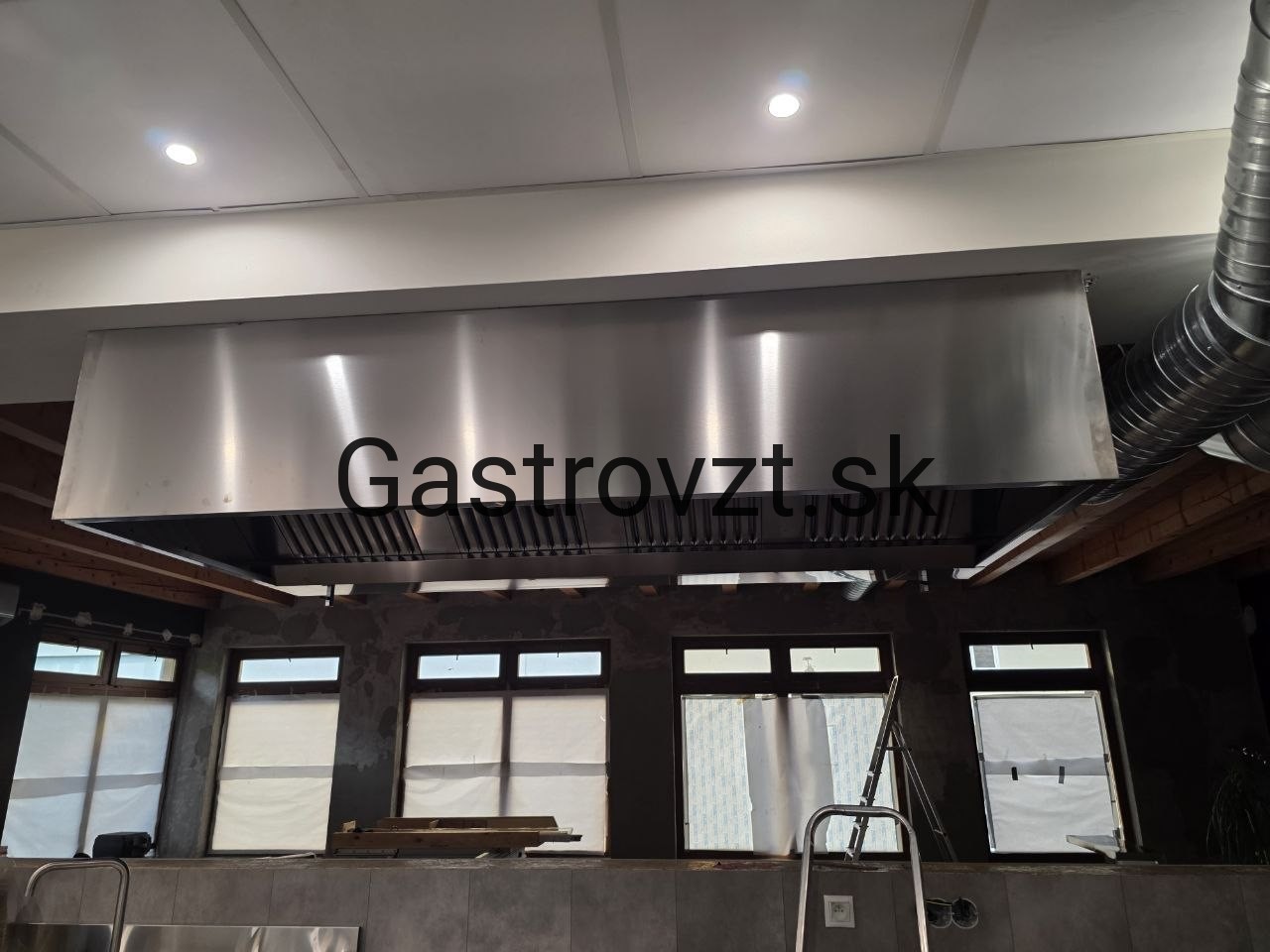
The whole project is in our references.
Four solutions in use
Wall canopy
The most common. It hangs on the wall above the cooking line. The wall helps guide the rising steam, so it needs less airflow than an island solution for the same effect.
It suits kitchens with appliances along the wall, which is most of them.
Island canopy
Hangs freely above a cooking block in the middle of the kitchen. Steam escapes on all four sides, so it needs considerably more capacity. The difference compared with a wall canopy is around 30 percent.
Used where the cooking block stands in the middle of the room.
Induction canopy
Part of the fresh air is fed into the canopy, creating an air curtain that directs the steam into the extract. As a result it handles the same kitchen with a lower extract volume.
Lower extraction means lower consumption and less heat blown out in winter. The purchase price is higher.
Ventilated ceiling
Instead of a canopy, the whole ceiling surface handles extraction and supply. Nothing hangs above the kitchen, the space looks clean and there is nothing to bump your head on.
It requires sufficient height and work on the ceiling structure. It is the most expensive of the solutions listed. It is used in open kitchens of premium restaurants and in large staff canteens.
Comparison
| Wall canopy | Island canopy | Induction canopy | Ventilated ceiling | |
|---|---|---|---|---|
| Purchase price | lowest | low | medium | highest |
| Required extraction | baseline | about 30% more | 20 to 30% less | depends on area |
| Running costs | medium | higher | lower | lower |
| Ceiling requirements | none | none | none | high |
| Look in an open kitchen | average | prominent feature | prominent feature | cleanest |
| Cleaning | easy | easy | medium | more demanding |
| Suitable for | appliances along the wall | cooking block in the middle | kitchens focused on consumption | open and large-capacity kitchens |
How to decide
Go through it in this order.
- 1. Where are the appliances? Along the wall means a wall canopy. In the middle of the room, an island canopy or a ventilated ceiling.
- 2. Can guests see into the kitchen? If so, appearance matters and it is worth comparing the price of a ventilated ceiling.
- 3. How high is your ceiling? Below 3 metres a ventilated ceiling mostly makes no sense.
- 4. How many hours a day do you cook? With long operating hours, the higher purchase cost of an induction canopy pays back faster through energy.
- 5. What is the load? Fryers and a grill push the choice towards more powerful solutions regardless of looks.
Material and maintenance
Canopies for commercial kitchens are made of stainless steel. The reason isn't looks but the fact that they have to be washed regularly with aggressive chemicals and must not corrode.
Every canopy includes grease filters. They are removed and washed, daily in heavy use. The better they work, the less grease gets into the duct and the lower the fire risk.
Questions and answers
Can a wall canopy later be replaced with a ventilated ceiling?
Technically yes, but it means building work on the ceiling and usually a new duct route too. The decision should be made before the refurbishment, not after.
Is a more expensive canopy always better?
No. In a kitchen with appliances along the wall, a wall canopy is the right choice and anything more expensive is money thrown away.
Do you make custom canopies?
Yes. The size follows the cooking line; the canopy must overhang the edge of the appliances.
How often are grease filters cleaned?
Once a week in a typical restaurant, more often with fryers and a grill. The duct itself roughly twice a year.
Related: restaurant hoods · kitchen extraction · how to choose a restaurant hood.
Get advice on the right solution