20/06/2026 · 5 min read
A restaurant extractor: how it differs from a domestic one
A commercial extractor isn't an enlarged domestic cooker hood. We explain how a professional extractor differs in capacity, filtration and design — and why it matters.
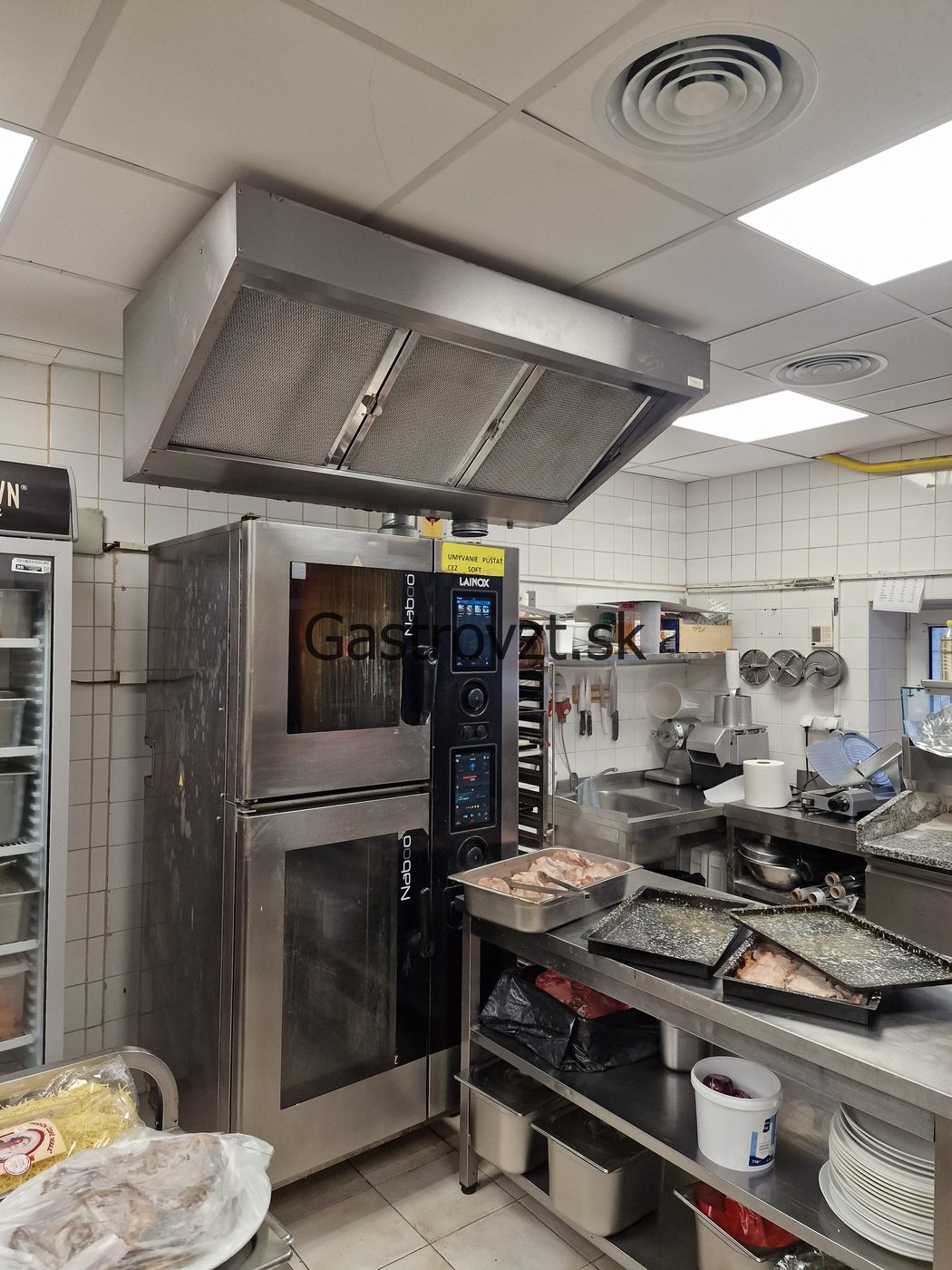
Many people picture an “extractor” as the device under the kitchen cabinet at home. In a restaurant it's a completely different league. A commercial extractor (hood) has to handle many times the load — and it's designed accordingly.
The capacity is completely different
A domestic extractor copes with steam from one hob. A food-service venue produces heat and steam from a grill, fryer, cooking block or combi oven all at once — all day long. That's why a professional hood has several times the capacity and is designed around the specific appliances.
Filtration and overhang
- Industrial grease filters that are easy to wash.
- Sufficient overhang beyond the cooking block so steam doesn't escape at the sides.
- Air supply sorted, so no negative pressure builds up.
- The motor ideally outside the kitchen for lower noise.
Why it isn't “buy it and hang it up”
Even the best extractor will disappoint if it's undersized or badly placed. That's why we treat it as a system — capacity calculation, filtration, duct route, air supply and controls. Only then does the extractor really draw.
Commercial hoods and extractors