23/06/2026 · 5 min read
Grease in the fan is a fire risk: why to clean in time
Grease doesn't just settle on the filters — it gets all the way into the fan and ducts. Why built-up grease is a serious fire risk and how often to clean.
Anyone can clean greasy filters. But grease doesn't stop at the filter — gradually it gets into the ducts and all the way into the fan itself. And it's exactly where you can't see it that the greatest risk arises.
Why grease in the fan is dangerous
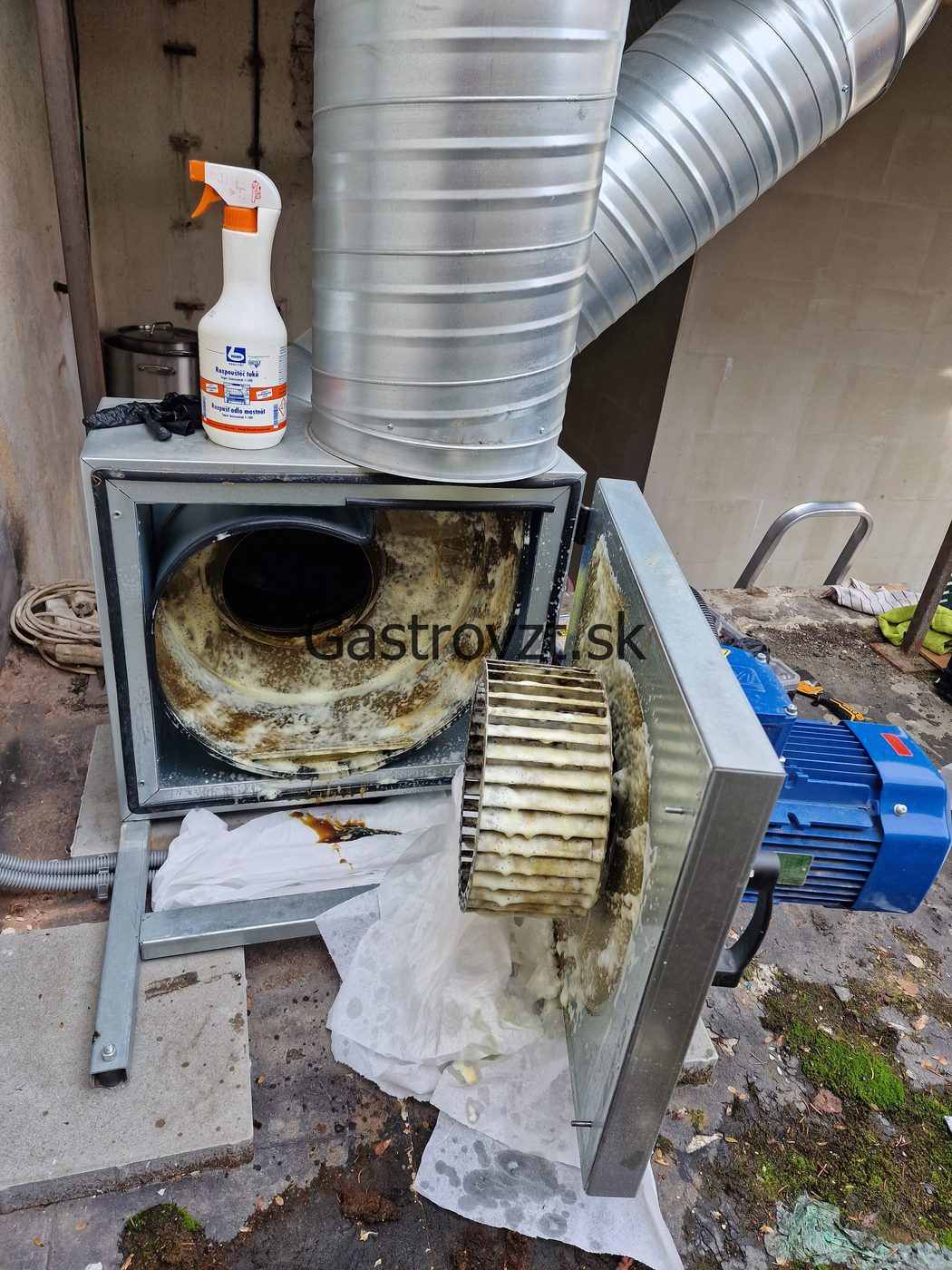
Built-up grease is flammable. A spark or a higher temperature from the appliances is enough for a fire to start in the duct or fan, and it spreads quickly along the whole ventilation route. That's why cleaning isn't just a question of performance, but above all of safety.
How grease gets all the way into the fan
No filter captures grease one hundred percent. Fine droplets pass through, settling on the duct walls and the fan impeller. Gradually a solid layer forms that reduces performance, throws the fan out of balance and increases noise.
How often to clean
- Grease filters — every one to two weeks.
- Ducts and fan — professionally, usually once a year, twice for demanding venues.
- With heavy frying and grilling, the intervals need shortening.
What you gain from regular cleaning
Besides a lower fire risk, you get back full extraction performance, lower consumption, quieter running and a longer fan life. Regular service is the cheapest insurance your kitchen has.
That's exactly what our ventilation cleaning and service is for — we clean the kitchen fan and the supply-unit filters and set a regular interval.
How often to clean and what neglect risks is also covered in the article cleaning restaurant hoods.
Have your ventilation checked and cleaned