26/08/2026 · 3 min read
Ventilation for bakeries and patisseries: how it differs from a restaurant kitchen
A bakery has a different load than a restaurant: flour dust, radiant heat from ovens and sensitive dough. What that means for ventilation design.
Anyone who designs bakery ventilation the same way as a restaurant kitchen makes a mistake. The load is different, the risks are different, and in a patisserie it is also about making the product last.
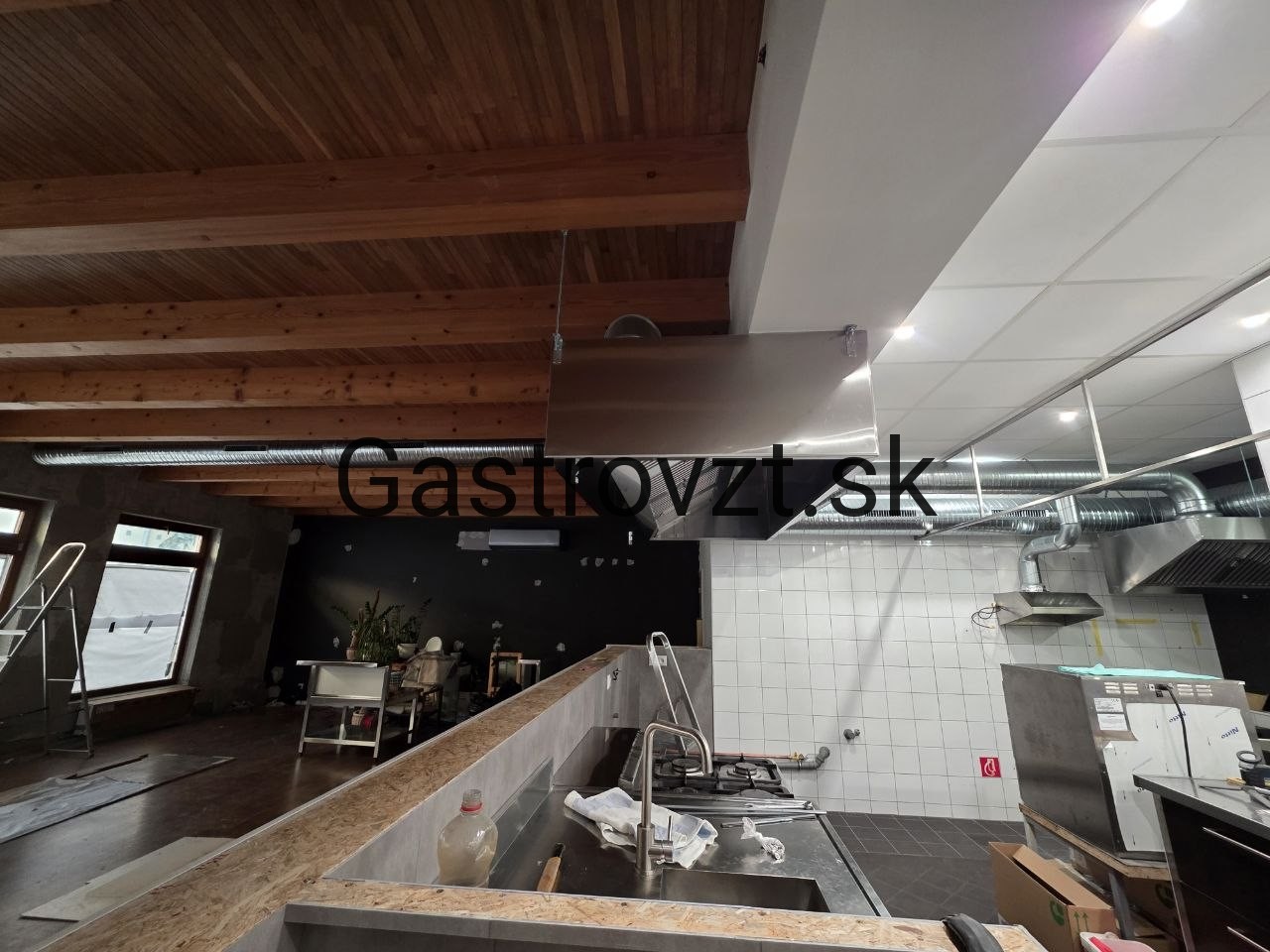
Three differences from a restaurant
Radiant heat instead of steam
A restaurant kitchen mainly produces steam and grease aerosol. A bakery oven mostly radiates heat, continuously throughout the whole shift.
In summer, a bakery without proper heat removal reaches temperatures at which nobody can work. An overheated space also affects how the dough proves.
Flour dust
This is a key point that is often overlooked in design. Flour dust is combustible and, at sufficient concentration, explosive. It also settles in the ductwork and clogs filters differently from grease.
That means a different approach to cleaning and to the choice of components than in a kitchen with a fryer.
Dough can't stand draughts
In a restaurant the main thing is that the staff don't sweat and smells don't reach the guests. In a bakery you also have to bear in mind that an air stream blowing on proving dough dries the surface and ruins the batch.
Supply air must therefore not be aimed at work surfaces or the proving room. Outlets and air velocity are handled differently.
A patisserie has one more requirement
In a patisserie, humidity matters as well as heat. Air that is too dry dries out sponges and creams; air that is too humid makes chocolate glazes lose their shine and marzipan go soft.
If you have a chilled cake display in the shop area, you also need to make sure warm air from production doesn't blow on it.
What this means for the design
| Requirement | Solution |
|---|---|
| Removing radiant heat from ovens | Canopy above the ovens, sized for heat load, not steam |
| Flour dust in the ductwork | Accessible ductwork with access doors, more frequent cleaning |
| Protecting dough from draughts | Supply outlets away from work surfaces, low air velocity |
| Heat in summer | Sufficient extraction plus proper supply, or cooling of supply air |
| Separating production from the shop | Pressure balance so heat and dust don't reach the shop area |
Night operation
Bakeries run when it is coldest outside. That has two consequences.
Supply air must be heated, otherwise an icy stream blows into production. At the same time, this is exactly where heat recovery is more interesting than in a restaurant, because you are removing large amounts of warm air from the ovens and that heat can be used to preheat the supply.
With long operating hours, the investment in heat recovery pays back faster.
Questions and answers
Is an ordinary restaurant hood enough above an oven?
A canopy above a bakery oven is sized to remove heat, not cooking steam. Both size and capacity are different.
How often should ductwork be cleaned in a bakery?
It depends on the operation. Flour dust behaves differently from grease, but it settles too. Our service covers cleaning of kitchen fans and of filters on supply units; cleaning the duct itself is a separate specialism.
Air blows on my dough. Can it be fixed without a rebuild?
In most cases, yes. It is solved by changing the outlets and adjusting the air velocity.
Do you also do patisseries with production and shop in one space?
Yes. The key is to set the pressure balance so that heat from production doesn't go into the shop area.
Related: kitchen ventilation · kitchen extraction · how much air a kitchen needs.
Design ventilation for your bakery