26/08/2026 · 4 min read
Hood not pulling? 7 causes of weak extraction in a commercial kitchen
Why a restaurant hood doesn't extract smoke and steam. The seven most common causes we find during site visits, and how to fix them.
The hood is running, you can hear it, but the steam rises around it and settles on the ceiling. Smoke from the grill drifts into the dining room. The cooks open doors so they can breathe.
The whole project is in our references.
In most cases the fan isn't broken. The cause lies elsewhere.
1. No air gets into the kitchen
The most common reason we come across. A hood can't extract more air than flows into the room. If someone solved make-up air with a half-open window, the system works at a fraction of its capacity.
The typical sign: the fan runs at full speed, but when you open the door to the dining room, extraction suddenly improves. That indicates negative pressure.
Solution: add a supply air unit. It doesn't have to mean touching the whole system.
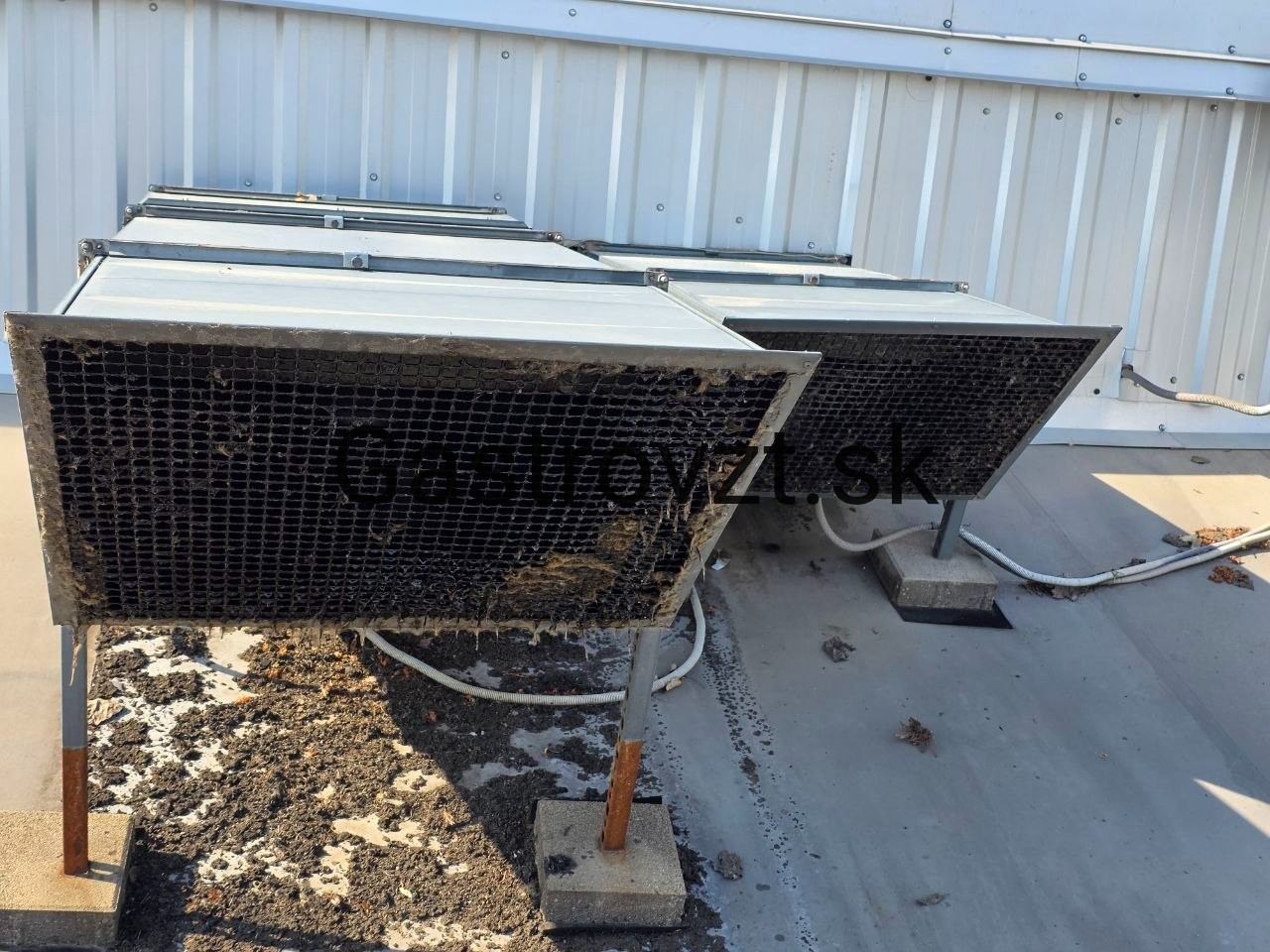
2. Clogged grease filters
Grease filters in a hood clog faster than most kitchens think. With fryers a week is enough. A clogged filter won't let air through and extraction can drop by half.
Solution: take them out, wash them, put them back. If the filters are deformed or rusted through, replace them.
3. Grease in the duct
Whatever gets past the filter settles in the duct. Within a few years a layer forms that narrows the cross-section. It is also a serious fire hazard.
Solution: the duct needs cleaning. Our service covers cleaning of kitchen fans built for it and of filters on supply units; cleaning the duct itself is a separate specialism. If the duct has no access doors, we add them.
4. The hood is too small or badly positioned
The canopy must overhang the edge of the appliances. Steam rises at an angle, not vertically. Without an overhang it escapes at the sides regardless of fan capacity.
Sometimes we find a hood shortened to fit a suspended ceiling, or shifted during a kitchen refit when appliances were moved.
Solution: modify or replace the canopy.
5. Too many bends in the duct route
Every bend costs pressure. A route with six changes of direction delivers considerably less than a straight route of the same length.
It usually happens because someone didn't want to deal with a penetration through the structure and ran the duct around it.
Solution: shorten and straighten the route where possible. Sometimes replacing one section is enough.
6. Appliances were added
The system was designed for a kitchen with a gas range and an oven. Since then a fryer and a lava-stone grill have been added. The heat load went up, extraction capacity didn't.
This is a common scenario after two or three years of operation.
Solution: recalculate the required capacity for the current equipment.
7. Badly set controls
If the system has a frequency inverter, it may be running at reduced capacity. Sometimes a previous technician set it like that because of noise, and nobody knows.
Solution: check the control settings.
How to find out which cause is yours
A quick test you can do yourself: switch the extraction to full and open the door to the dining room. If extraction improves, the problem is make-up air (point 1).
Next, look at the filters. If they feel greasy to the touch, start there (point 2).
The remaining causes can't be identified without measurement. During the site visit we measure the actual airflow on extract and supply and compare it with what the system should deliver.
Questions and answers
Will replacing the fan with a stronger one help?
In most cases, no. If the problem is make-up air or a clogged duct, a stronger fan just drones more and uses more electricity.
How often should the filters be cleaned?
Once a week in a typical restaurant, more often with fryers and a grill.
How long does the site visit take?
About an hour and a half. We come within a working week.
Do you prepare design documentation?
No. We do calculations, an engineering assessment of capacity and airflow, and a proposed solution. If licensed design documentation is needed for planning permission, we can coordinate it with the relevant specialist.
Related: commercial hoods for restaurants · kitchen extraction · hood installation · negative pressure in the kitchen.
Measure your actual extraction