03/09/2026 · 8 min read
Why kitchen extraction doesn't draw although the fan runs at full power
Five causes from practice: route resistance, missing supply air, poor duct routing, a broken capture zone and the filters. With a check you can do in ten minutes.
The most common phone call we get almost always sounds the same: “The extraction doesn't work. We replaced the fan with a stronger one and it didn't help.” In twenty years of this work we've got used to the fact that nine times out of ten the fault isn't the motor. The motor is the last thing that should be replaced — and usually the first thing people reach for.
1. Motor power isn't system performance
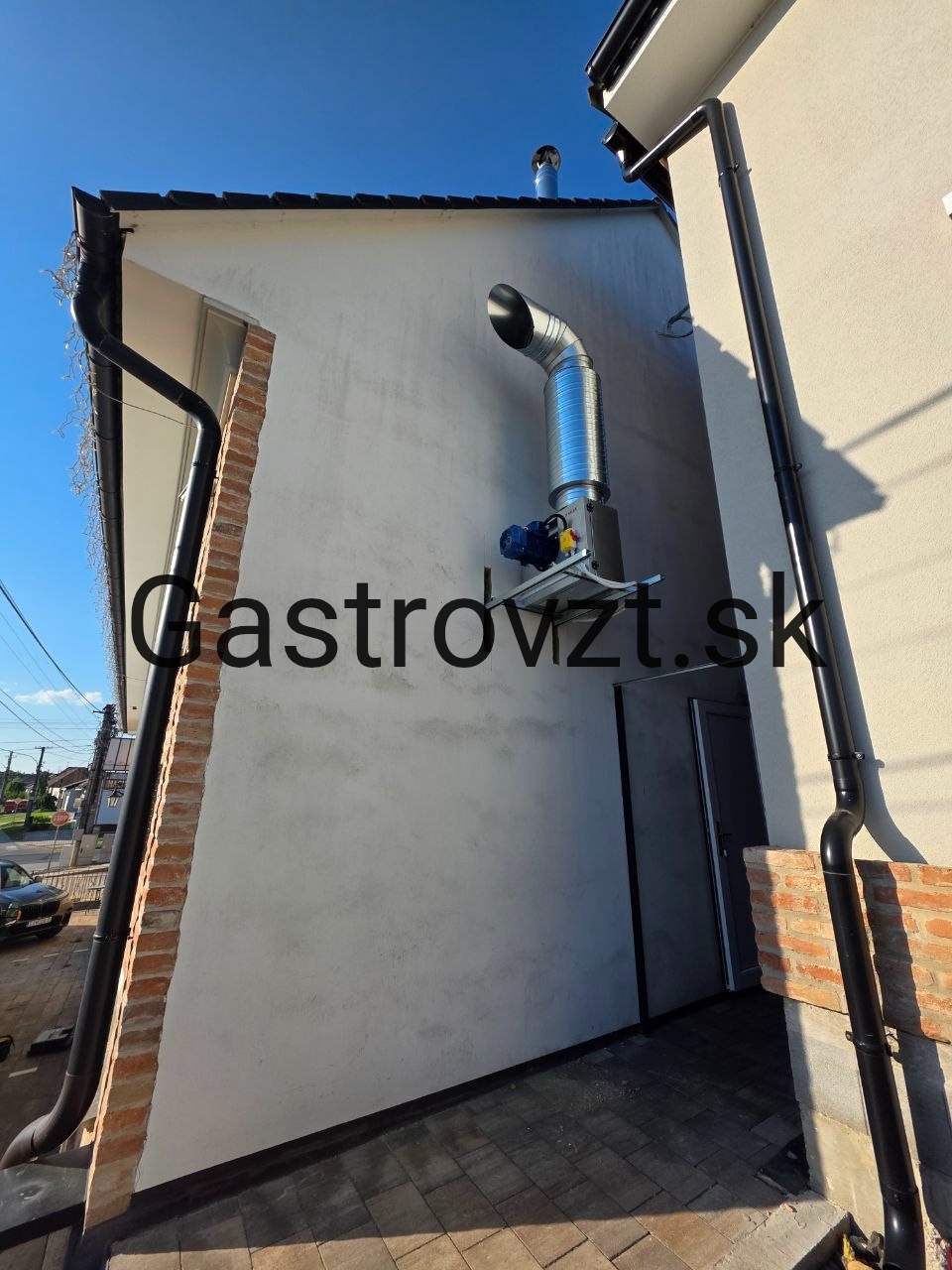
At the MACHO restaurant in Malženice they had replaced the fan twice before we arrived. The extraction still didn't draw. The cause was visible at first glance: an inline fan in the duct and in front of it a grease filter completely blocked with solidified grease. The system also had components that had no business being on the route and only added resistance.
The air had nowhere to go. In that state a stronger motor does nothing except overcome the same resistance more loudly and more expensively. The extracted volume stays the same. The solution was to remove the redundant components and move the fan from the duct to the building's façade — a motor outside the room doesn't disturb anyone and can be reached for maintenance.
2. Extraction without supply is half a system
The extraction above the cooking line removes thousands of cubic metres of air an hour. The same volume has to get back into the venue. If there's no controlled supply, air is drawn from wherever it can — under the doors, through gaps, through drains and, above all, from the dining room.
- Doors are hard to open, as if something were holding them.
- Gas appliances burn worse; the flame is unstable.
- Drains smell, even though the traps are fine.
- In winter a cold draught blows onto guests near the door.
- The air conditioning runs flat out and the kitchen is still hot.
The last point is worth explaining. If a venue has no supply, the air conditioning in the dining room is in fact cooling the kitchen — and the kitchen sends that cooled air out through the hood.
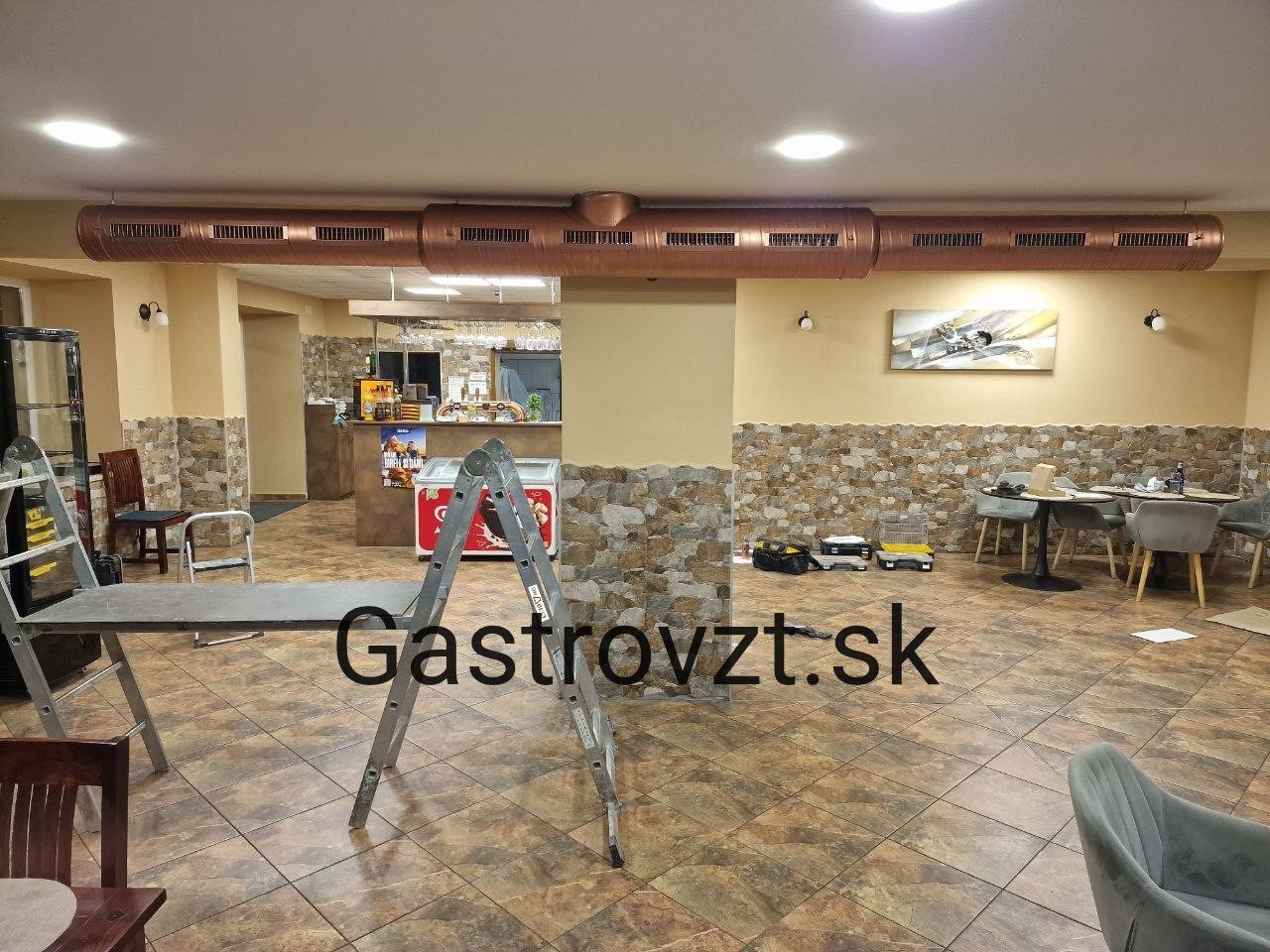
At the Village restaurant in Bátka we dealt with exactly this. The client described it as “the fan hums and doesn't extract”. We installed three supply systems totalling 6,000 m³/h and two extraction systems with kitchen fans totalling 7,000 m³/h. The numbers aren't equal on purpose: a slight excess of extraction stops kitchen smells passing into the guest area.
3. The duct route matters more than the hood itself
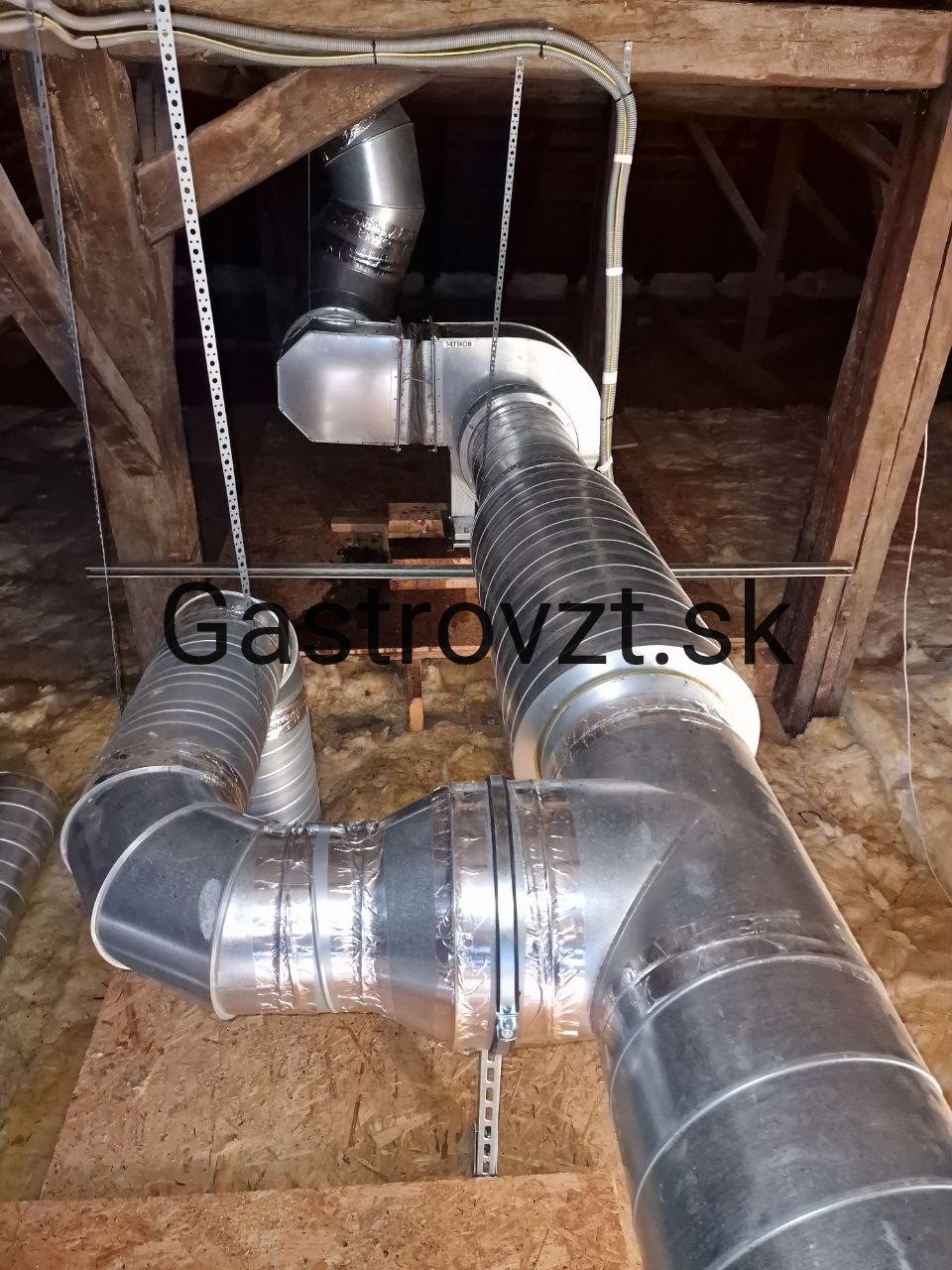
Operators focus on choosing the hood and treat the ductwork as a detail. The result: a correctly sized hood draws weakly because the duct is too narrow or has needlessly many bends. We've seen routes with seven changes of direction because someone didn't want to break through a load-bearing wall.
A practical measure you can check with a tape: allow at least about 50 cm between the hood and the ceiling for the duct bend — for example a 90° elbow of 250 mm diameter. If you're planning a grid ceiling, threaded rods or suspension hooks need to be in place before it's closed.
4. Even air conditioning can break the capture zone
A cassette air conditioner blows along the ceiling in four directions. When it's placed near the hood, its airflow breaks up the capture zone above the cooking line. Instead of going into the extraction, steam and smells scatter around the kitchen — while the extraction runs at full power.
An open window opposite the hood or a wrongly directed supply diffuser does the same. Supply air has to arrive in a way that supports the capture zone, not blows it apart. That's why the position of air-conditioning units is decided together with the extraction route, not afterwards.
5. Filters that only look like filters
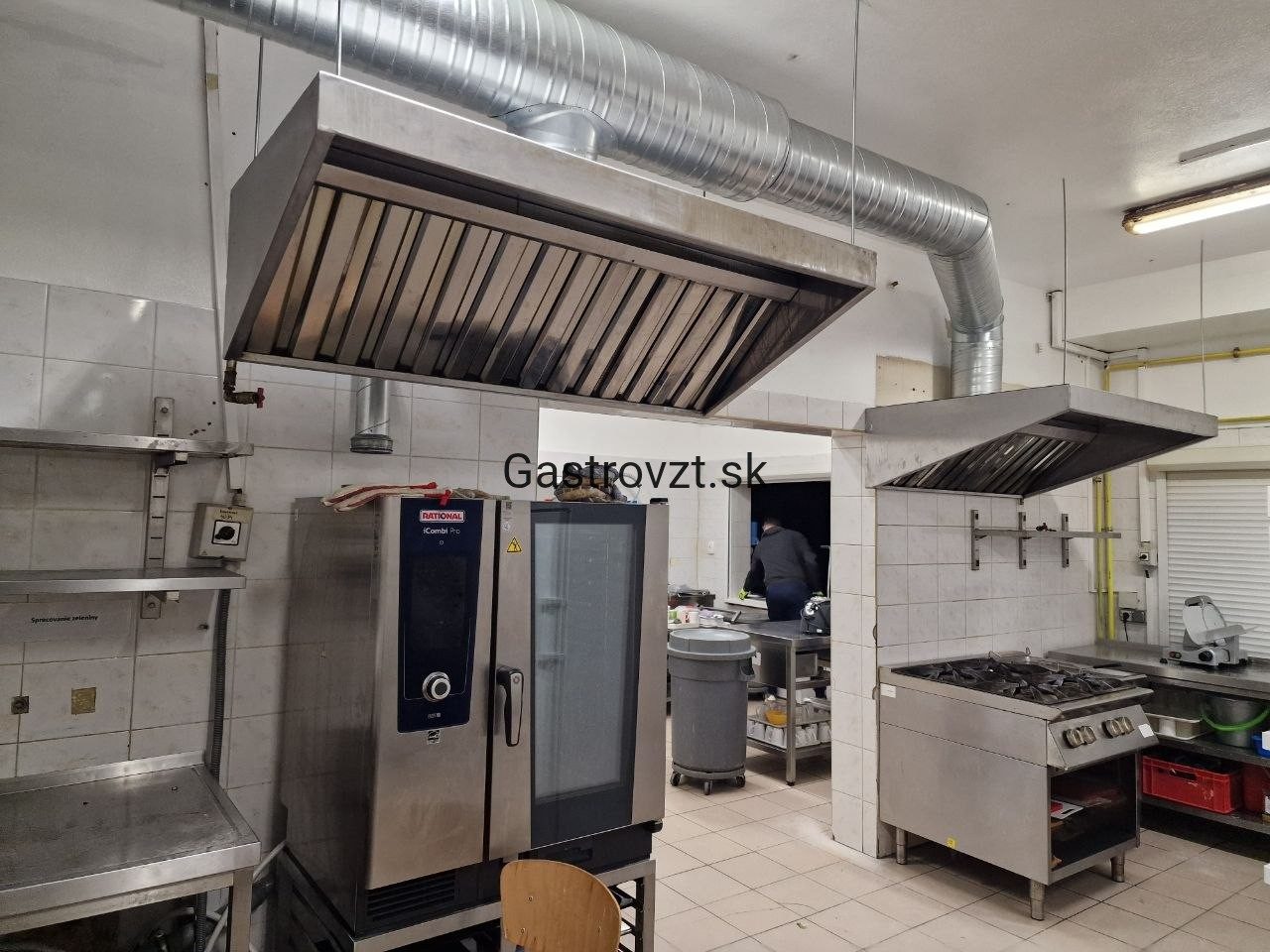
In the canteen of a care home in Senica we found extraction that wasn't working properly. The hoods themselves were fine — the arrangement around them was the problem. It was enough to remove them, swap their positions according to where cooking actually happens, and connect them to a new system. No new canopies were bought.
At another site we found labyrinth filters in the existing hoods that catch grease poorly. We remade them on the spot: we cut open the old filters and fitted aluminium mesh and a protective grille inside. That protects the new system from grease that would otherwise settle in the ducts. And deposited grease isn't just a question of performance — it's flammable.
What to check in ten minutes
- Try the door. Is it hard to open? You have negative pressure; supply air is missing.
- Light a candle under the hood with the extraction on — the flame should clearly pull upwards.
- Hold the filters up to the light. If you can't see through them, the system is breathing through an obstacle.
- Find where the air comes in. If you can't point to a place, the answer is “nowhere”.
- Check whether the fan can be reached. A motor that can't be opened will never be cleaned.
Your venue doesn't have to close for a week
Most owners put off fixing the ventilation because they picture a week of a closed venue. In Bátka we installed the whole system — three supply and two extraction systems — so that most of the work was done outside opening hours and in the attic. The restaurant was closed for one single day. The work schedule is as much part of the solution as sizing the ducts.
When it's cheapest to deal with
While the space is being prepared, when the walls are bare and the ceilings open. The second-best moment is when appliances are replaced — a new combi oven changes the heat load, and a system sized for the previous kitchen may not cope with it.
The most expensive moment is when the ventilation is done a second time. At one of the sites where we redid another supplier's work, the client paid twice for the same thing. Cheap installation turns out expensive precisely when it has to be done again — and the second time is always more complicated, because the space is already finished.
Related: commercial kitchen hoods for restaurants, kitchen extraction, air conditioning and ventilation in a restaurant and documented projects.
Free survey of your venue